Moles in the garden

Moles can churn up a nice lawn in a few nights. They eat worms and larvae, not plant roots — but the molehills are very annoying.

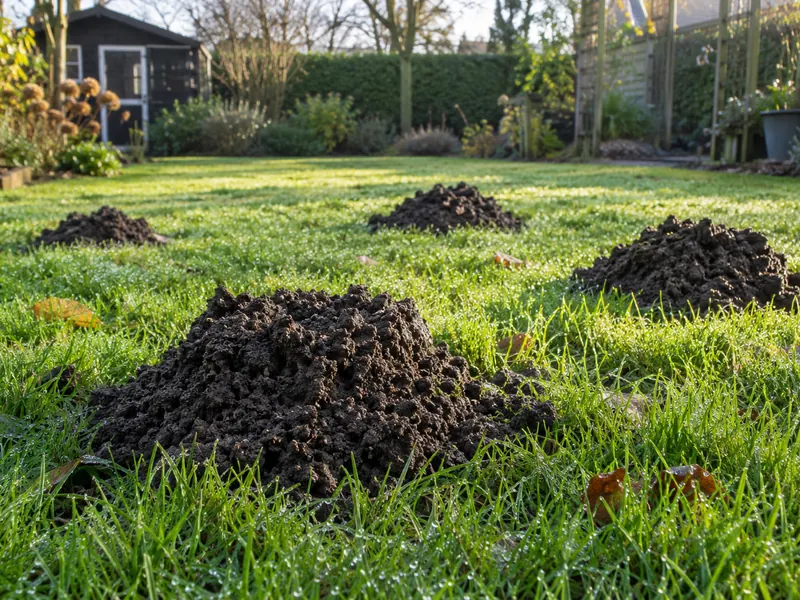
Fresh molehills of dark soil on a green lawn in a Dutch back garden

How to recognise moles

  • Fresh heaps of loose soil in the lawn or border
  • Raised tunnels just below the surface
  • Sunken patches in the grass

Why deal with it?

Moles are not dangerous, but they make lawns, sports fields and meadows uneven. Which measures are allowed differs per province.

Our approach

  1. Establishing whether it is moles (or, for example, water voles).
  2. Finding the main tunnels and choosing an approach that is allowed in your province.
  3. Advice on keeping new moles out of the garden, for example with mesh under a new lawn.

What can you do yourself?

  • When laying a new lawn, put mole mesh under the turf
  • Rake out fresh molehills and roll the lawn
  • Sound and scent repellents have mixed results

We help in, among other places, Amsterdam · Rotterdam · The Hague · Utrecht · Eindhoven · Breda · Leiden · Haarlem · Tilburg · Den Bosch · Dordrecht · Delft.

Questions about moles

Do moles eat plant roots?

No, moles mainly eat earthworms and larvae. Damage to roots is caused by the digging.

Am I allowed to catch moles myself?

That depends on the rules in your province. We are happy to tell you what is allowed where you live.

Do moles come back?

New moles can come from the surrounding land. Mesh under the lawn is the most lasting solution.

Other pests

Larder beetles

The larder beetle lives on animal products: dried meat, sausage, cheese, pet food, but also dead insects, mice or birds.

Carpet beetles

The damage comes from the larvae, also called woolly bears.

All types of pests

Problems with moles?

Call or message us and tell us what you see. We are happy to help.